

How functional snacks can support your dog's natural detoxification process
Tanja WeinandA dog's body detoxifies continuously via the liver, gut, kidneys and skin. Functional snacks can accompany these natural processes nutritionally by gently supporting digestion, nutrient utilization and metabolism. This article shows how selected herbs and functional ingredients can be part of a holistic, everyday dog diet – without radical detox concepts.
A dog's body has a highly complex detoxification system of its own. Detoxification is not a seasonal trend or a short-term cure – it takes place every day, around the clock.
Organs such as the liver, gut, kidneys and skin work continuously to eliminate metabolic products, environmental burdens and excess substances from the body. A carefully composed, functional diet can gently accompany these processes without putting a strain on the organism or throwing it off balance.
This is exactly where functional snacks come in.
Detoxification in dogs – what does it really mean?
When we talk about detoxification, it's not about “cleansing” the body or actively flushing out harmful substances. Rather, detoxification means allowing the body's natural metabolic pathways to work optimally.
Sensible nutritional support aims to:
- relieve the detoxification organs, not stimulate them
- stabilize gut function and nutrient utilization
- allow the body's own processes to run evenly and without stress
Which metabolic processes can be supported?
The liver – the central detoxification organ
The liver is the dog's most important metabolic and filtering organ. It converts metabolic products, neutralizes substances and prepares them for excretion.
Traditionally used herbs such as milk thistle, dandelion and nettle can accompany liver function nutritionally by:
- supporting the metabolism
- promoting blood circulation
- positively influencing regeneration processes
In functional snacks, they are used in moderate doses – as an accompaniment, not a burden.
The gut – a key organ for balance and elimination
A large part of detoxification takes place in the gut. This is where it is decided which substances are absorbed and which are excreted.
A stable gut can be supported by:
- fiber that promotes bowel movement
- a balanced gut flora
- improved nutrient absorption, which means fewer unused substances are produced
A well-functioning gut automatically relieves the liver and kidneys as well.
The kidneys – excretion of water-soluble substances
The kidneys filter the blood and excrete water-soluble metabolic products via the urine. Adequate fluid intake is essential for this.
Certain plant components such as nettle are traditionally used to accompany kidney function nutritionally, always in combination with sufficient water.
The skin – an often underestimated detoxification organ
The skin also contributes to elimination, for example through sebum production, skin renewal and shedding.
The following have a supporting effect here:
- omega fatty acids to stabilize the skin barrier
- selected herbs for skin metabolism
- a good supply of micronutrients
Healthy skin is often a reflection of inner balance.
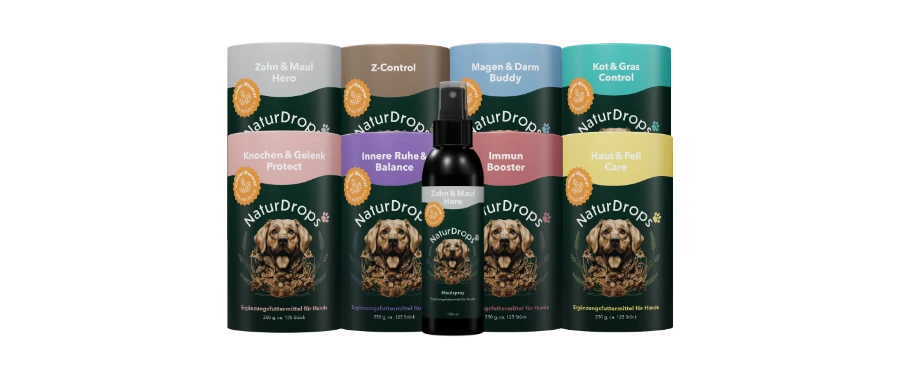
Functional ingredients in our Drops – targeted support from nature
In addition to classic herbs, our functional Drops contain selected natural ingredients that accompany the detoxification metabolism on different levels. What matters is not a single substance, but how they work together.
Brewer's yeast – gut balance & metabolism
Brewer's yeast provides natural B vitamins, amino acids and trace elements. It can:
- support the gut flora
- improve nutrient utilization
- accompany the general metabolism
A stable gut forms the basis for functioning elimination processes.
Spirulina – cell metabolism & vitality
Spirulina is a nutrient-rich microalga with high-quality plant protein and secondary plant compounds. In functional snacks, it can:
- support cell metabolism
- accompany antioxidant processes
- contribute to general resilience and vitality
- Peat extract – soothing & binding in the gut
Peat extract contains natural humic acids, which are traditionally used in the gastrointestinal area. They can:
- bind unwanted substances in the gut
- provide protective support for the intestinal mucosa
- stabilize the digestive balance
Vegetable charcoal – gentle support for elimination
Vegetable charcoal has a high adsorption capacity. Used in moderate doses, it can:
- bind excess metabolic products in the gut
- support their natural removal
- temporarily relieve the digestive system
Psyllium – regulating bowel activity
Psyllium seeds provide soluble fiber that:
- binds water and regulates stool volume
- supports bowel movement (peristalsis)
- helps stabilize stool consistency
A well-regulated gut is a central building block of any gentle relief.
Why functional snacks are a sensible accompaniment
Functional snacks differ significantly from short-term “detox cures” or radical programs.
Their advantages:
- simple daily use
- clear dosage without overdoing it
- high acceptance among dogs
- easy to combine with the usual food
- gentle support instead of radical interventions
How and when to use them?
For sensible support of the natural detoxification processes, the following applies:
- 1–2 times a day, depending on the product
- always provide enough fresh water
- ideally during a calm, low-stress phase
- not at the same time as major changes in diet
Detoxification is not a short-term project, but a continuous process that benefits from regularity.

Conclusion: balance instead of the detox trend
Your dog's body knows how detoxification works. Functional snacks can accompany these processes nutritionally by supporting the gut, liver, kidneys and skin in their natural function.
Not as a cure.
Not as a miracle remedy.
But as part of modern, holistic dog nutrition that focuses on quality, balance and long-term well-being.
Sources and further reading:
1. Meyer, H.; Zentek, J. Ernährung des Hundes – Grundlagen, Fütterung, Diätetik.
Enke Verlag, Stuttgart.
2. National Research Council (NRC). Nutrient Requirements of Dogs and Cats.
National Academies Press, Washington, D.C.
3. Suchodolski, J. S. (2016). Diagnosis and interpretation of intestinal dysbiosis in dogs and cats. The Veterinary Journal.
4. FEDIAF – European Pet Food Industry Federation. Nutritional Guidelines for Complete and Complementary Pet Food for Cats and Dogs.
5. Guggenbuhl, P. et al. (2012). Effects of dietary supplementation with humic substances on gut health. Journal of Animal Science.
6. Holman, B. W. B.; Malau-Aduli, A. E. O. (2013). Spirulina as a functional ingredient in animal nutrition. Journal of Animal Physiology and Animal Nutrition.
Quellen:
- https://books.google.de/books?id=1NykDAAAQBAJ&printsec=frontcover&hl=de#v=onepage&q&f=false
- https://nap.nationalacademies.org/resource/10668/dog_nutrition_final_fix.pdf
- https://pubmed.ncbi.nlm.nih.gov/27160005/
- https://europeanpetfood.org/self-regulation/nutritional-guidelines/
- https://www.mdpi.com/2077-0472/11/8/744
- https://onlinelibrary.wiley.com/doi/10.1111/j.1439-0396.2012.01328.x


