

This is how your dog's coat changes over the years
Merijo Eileen JordanYour dog's coat is far more than just a pretty accessory; it protects against the elements, regulates body temperature, and often provides a very accurate indication of your pet's health. However, a dog's coat changes significantly over the course of its life. These changes are perfectly normal, but can sometimes also be signs that your dog needs special support.
1. The puppy's coat – soft, fluffy and still growing
Puppies are born with a particularly soft, fluffy coat. Its main purpose is to keep them warm.
In this phase:
- the fur is still very fine ,
- often not yet in its final color ,
- less dense .
The transition to [something] begins between the 4th and 12th month. Adult coat , which is often accompanied by a more intensive shedding process. Many dogs lose a lot of hair during this time – completely normal!
2. Adult coat – structure, color & protective function
Once your dog is an adult, its coat will have "settled" into its final form. The coat texture (short, long, curly, rough) is genetically determined, but factors such as diet, stress, and grooming significantly influence its appearance.
Typical characteristics of adult fur:
- More pigment , therefore more vibrant colors
- more robust topcoat
- dense undercoat (depending on breed)
- regular shedding in spring and autumn
This phase clearly shows whether the coat and skin are well-nourished. Dull, dry, or brittle fur can indicate nutrient deficiencies or skin problems.
3. Senior coat – when the dog gets older
Over the years, the coat changes again, often slowly and almost imperceptibly.
Typical changes with age:
- Greying : White fur often appears, especially around the muzzle and eyes.
- Thinner fur : Hair growth slows down, and there is less undercoat.
- Dry or sensitive skin : Sebum production decreases.
- Increased flaking : The skin regenerates more slowly.
- Increased hair loss : Old hairs are shed less effectively.
Many older dogs also develop Skin sensitivities or need more support for coat shine and skin protection.
When changes can be a sign of problems
Not every change in coat color is age-related. You should take a closer look if:
- bald patches appear
- The dog scratches or licks itself excessively
- red, inflamed or scaly patches develop
- the hair loss is suddenly very severe
- the coat appears unusually greasy or extremely dry
In such cases, an allergy, skin condition, or hormonal imbalance (e.g., thyroid) could be the underlying cause. A visit to the veterinarian is then important.
How you can support your dog's coat at every stage of life
✔️ Regular grooming depending on coat type
✔️ Omega-3 and Omega-6 fatty acids for skin protection and shine
✔️ High-quality nutrition with sufficient vitamins and minerals
✔️ Stress reduction – Stress is very quickly reflected in the coat.
✔️ Sufficient exercise and fresh air for healthy skin circulation.
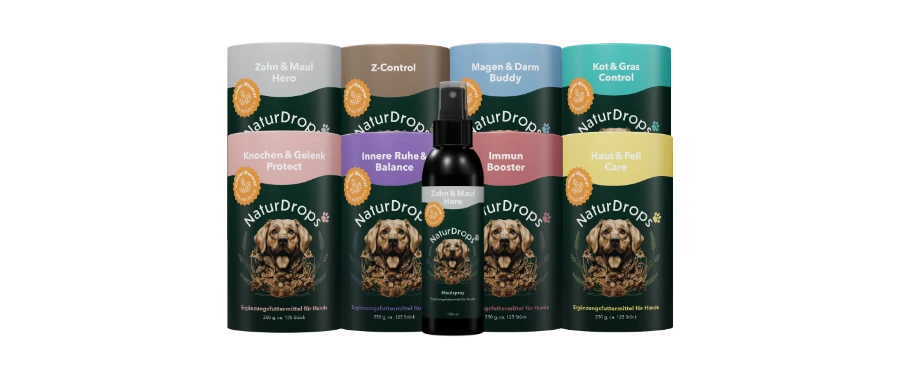
For targeted support of skin and coat, we recommend our Skin & Coat Care Snacks , rich in functional ingredients that strengthen your dog's coat from the inside out.
Quellen:


