

Bad breath in dogs – causes, tips & solutions
Merijo Eileen JordanBad breath in dogs – identifying the causes and taking the right action
Why does my dog's breath smell bad?
Many dog owners know this feeling: their four-legged friend greets them with a big smacking sound – and suddenly there is an unpleasant smell in the air.
Bad breath in dogs is not uncommon and can have many causes:
- Tartar & plaque: The most common cause of bad breath
- Inflammation in the mouth: Gingivitis or periodontitis
- Gastrointestinal problems: Indigestion often affects breathing.
- Food & Snacks: Inferior ingredients or leftovers in the mouth
- Common medical conditions: Liver or kidney problems can cause bad breath.
Typical signs besides bad breath
- Yellowish or brownish coating on the teeth
- Red or bleeding gums
- Chewing difficulties, teeth grinding
- Excessive salivation
- Frequent paw rubbing at the mouth
What helps against bad breath in dogs?
- Regular dental care: Brush teeth with dog-friendly toothpaste.
- Healthy diet: High-quality food that does not promote deposits
- Chewing activity: Snacks and sticks that mechanically loosen tartar.
- Veterinary check-up: Detecting dental diseases early
- Natural dental care products: Supplementary sprays or snacks for daily support
Our tip – Tooth & Mouth Hero
Fresh breath and healthy teeth – completely stress-free! 🐾
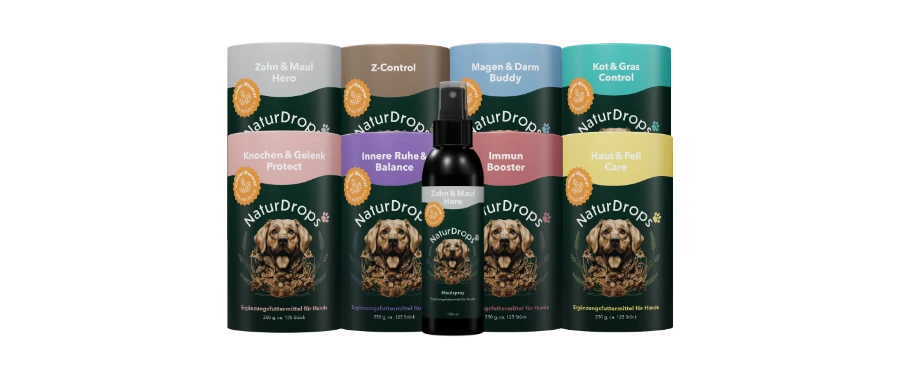
Our Tooth & Mouth Hero products support your dog's dental health:
- Tooth & Mouth Hero Spray: Neutralizes odors and reduces plaque formation
- Tooth & Mouth Hero Chew Stick: Strengthens the chewing muscles and helps to mechanically loosen deposits.
Say "goodbye" to dog bad breath - discover our range now!
Quellen:


